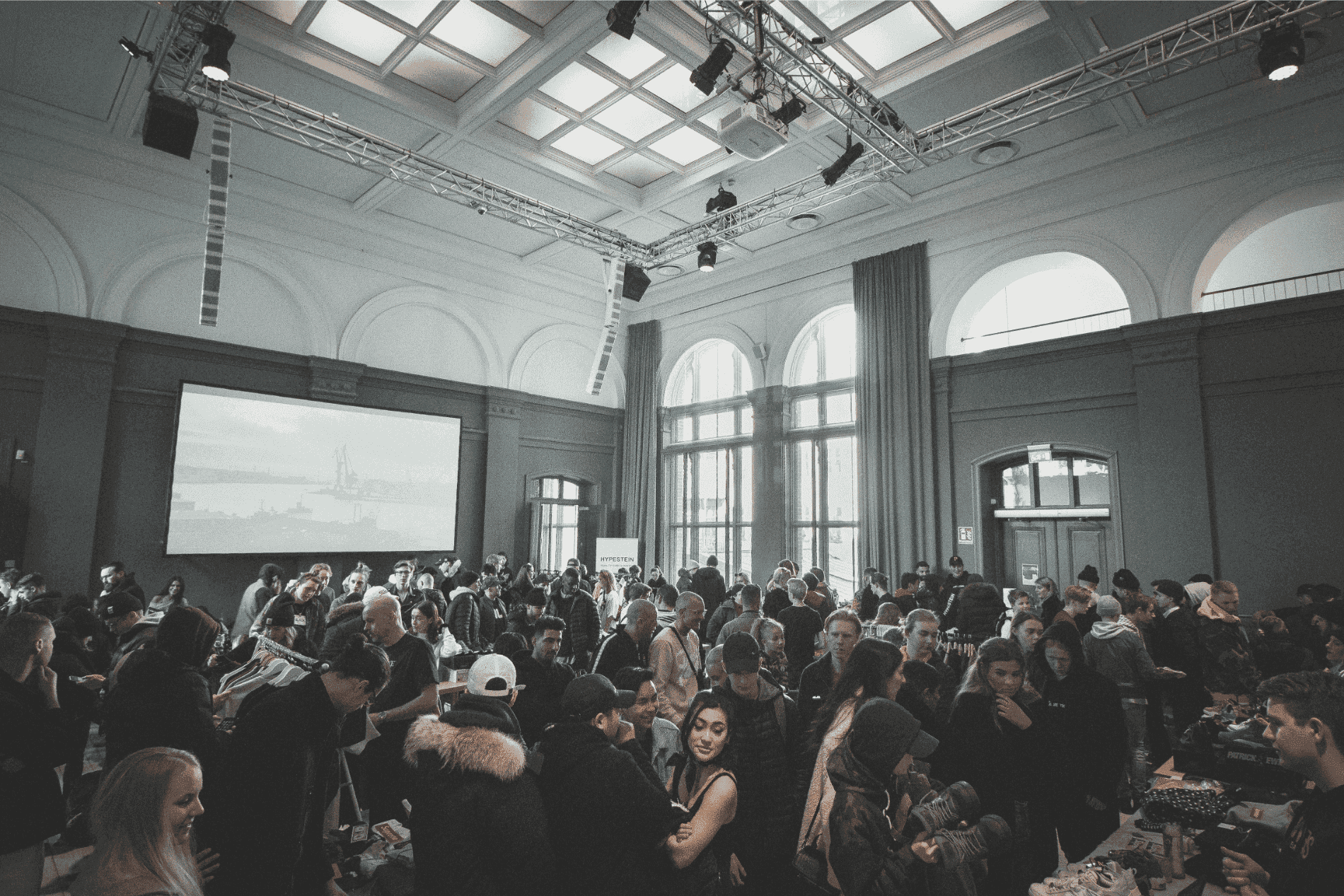
Event management

What Does an Event Manager Actually Do?

What Does an Event Manager Actually Do?

Professional event organization is one of the most complex areas of marketing and business communication.

What Does an Event Manager Actually Do?

Corporate events, from intimate board meetings through industry conferences to large-scale congresses of several hundred people, have become a tool with real sales, employer branding and relationship value. As participants' expectations grow, so does the complexity of production, and with it the cost of every organizational mistake.

The role of the event manager is at the same time one of the least understood professions in marketing. Clients who have not worked with a specialized event agency before often see the job narrowly: booking a room, choosing the catering and coordinating on the day of the event. In reality, an event manager's work covers a far wider range of competences, from business strategy and project, budget and risk management to production, creative and logistics oversight.

In this article I present the full and transparent anatomy of organizing a B2B event. It is a practical guide for people responsible for marketing, communication, employer branding and sales in companies, wherever a corporate event is a tool for achieving specific business goals.

A conscious understanding of what happens behind the scenes of a professional event production has both educational and practical value. It lets you prepare the brief more precisely, compare event agency offers rationally, plan the budget realistically and, most importantly, choose partners that match the scale and requirements of a specific project.

Types of B2B Events and Why the Format Matters

Before a professional event agency starts work on a specific project, it is crucial to define precisely the type of event being organized and its purpose. Every B2B event format has its own production logic, its own success metrics, its own budget patterns and its own typical organizational pitfalls. A client who asks the agency to "organize a conference" while actually needing an anniversary gala with conference elements will get a solution that answers a different question than the one that was really asked. The list below covers the most common categories of B2B events produced on the Polish market.

Industry Conferences and Congresses

Multi-day events with an extensive content program, a speaker panel, workshop sessions and a networking zone. The typical scale is 150 to 800 participants. The main business goal is expert positioning of the organizer, generating sales leads and educating the market. Conferences require advanced technical infrastructure: LED screens, concert-grade sound, simultaneous interpretation booths when English-speaking guests are present, as well as a dedicated registration platform and comprehensive media support.

Press Conferences

Short events lasting a few hours that announce strategic company decisions: new partnerships, product launches, financial results, changes on the board. They are characterized by the presence of journalists and media broadcast, which means zero margin for error in multimedia, set design and protocol. A press conference must satisfy two regimes at once: the formal rigor of a media meeting and a visual dynamic that holds attention in television coverage and press materials.

Product Launches

Premiere events that introduce a new product or service to the market. The goal is to maximize the wow effect, generate media and social media buzz, and deliver visual material that supports later sales communication. The format often combines elements of a conference, an artistic program and a product demonstration zone in which participants can interact directly with the new solution.

Client Events

Events that build long-term relationships with key clients. Most often intimate, held in unusual locations: wineries, museums, private residences, yachts or historic buildings. They require refined VIP service, non-standard experiences (tastings, workshops led by industry masters, private concerts) and absolute discretion in communication.

Team Integration Events and Team Building

Internal events focused on building the team and organizational culture. The format is extremely varied: from one-day activities (off-road rallies, cooking workshops, escape rooms, sports competitions), through weekend integration trips, to multi-day incentive journeys with an extensive program of experiences. Key success indicators include the level of participant engagement, the quality of relationships within the team and the impact on employee retention.

Galas and Holiday Events

Annual company events, most often in winter (company Christmas Eve dinner, New Year's ball) or anniversary events. The standard format includes a served gala dinner, an artistic program and an awards ceremony for employees or partners. A specific challenge is that employees attend this event many times over their careers, so the event agency must introduce an element of novelty and surprise each time, without repeating the patterns of previous editions.

Anniversary Events

Events commemorating round anniversaries of a company or brand: 10, 25, 50 or 100 years of operation. They combine a retrospective dimension (storytelling based on the company's achievements, archive exhibitions, the presence of historical founders and partners) with a forward-looking one (presenting directions of development, new products, a new strategy). They often require elaborate narrative set design and an artistic program adapted to the brand's identity.

Kick-off Meetings

Meetings that open a calendar year, a quarter, a sales campaign or the rollout of a new strategy. Addressed mainly to sales teams, commercial departments and dealer networks. The format includes strategic presentations from the management, announcing annual goals, team motivation and integration. Effectiveness is measured by the team's energy in the first weeks after the event and by the fulfillment of plans in the following quarters.

Incentive Events

Events that serve as a reward for the best employees, trade partners or dealers. Most often held away from the office, in Poland or abroad, with an extensive premium-segment program of experiences. Business goals include strengthening loyalty, motivating people to deliver results in the coming year and building a community with the top segment of strategic partners.

Partner and Dealer Network Meetings

Annual or semi-annual meetings with the distribution network and strategic contractors. A conference and integration format: part of the day is devoted to strategic and product sessions, with a gala dinner and an artistic program in the evening. When foreign contractors are present, bilingual event service is required, including simultaneous interpretation, materials in language versions and English-speaking hostesses.

Trade Fairs and Promotional Stands

A company's presence at larger events organized by third parties. They require designing and producing the stand construction, a program of accompanying events (product presentations, demonstrations, networking), and managing the sales team and marketing materials for the entire duration of the fair.

Hybrid Events and Webinars for Clients or Partners

A format that combines an offline part with an online broadcast for remote participants, increasingly standard in B2B communication. It requires specialized technical infrastructure: studio-grade video production, two parallel directing teams (the room and the online platform), interactive mechanisms that engage remote participants and post-production of the material for later use in marketing communication.

Sponsorship and Sports Events

A specific subtype that combines business with the dynamics of sport: announcements of partnerships with clubs and sports federations, presentations of sponsored athletes. They require non-standard set designs (pitches, displays of sports equipment, the presence of athletes), service for a specific group of media and coordination with federations and sports clubs.

Distinguishing the formats above is of fundamental practical importance. The brief, the creative concept, the choice of venue, the cost estimate and the production timeline differ radically between, for example, a press conference for eighty journalists and an anniversary gala for four hundred employees. An experienced event manager recognizes the type of project during the very first conversation with the client and selects tools and production methodology accordingly.

The Stages of Organizing an Event: From A to Z

Stage One: Brief and Strategy

Professional production of a B2B event starts long before the first venue booking. The first stage covers conceptual and strategic work whose task is to translate the client's business goal into a concrete vision of the event.

The key questions that should be asked at the first briefing meeting include:

  • What is the measurable business goal of the event?

  • Who is the target group: what are their expectations, motivations and time constraints?

  • What should the participant feel during the event?

  • What should they remember a week after it ends?

  • What specific action should they take after the experience: a purchase, a recommendation, continued cooperation, an internal referral within the organization?

  • What is the real project budget, including a reserve for unforeseen changes?

  • What compliance and GDPR requirements apply, particularly important for events for regulated companies?

Without precise answers to these questions, every subsequent stage of work carries the risk of misjudged decisions. An event whose goal remains unclear even to the organizer will leave no lasting mark on the participant, regardless of the amount spent.

The strategic stage also includes setting performance indicators (KPIs). For B2B events, the most commonly measured indicators include:

  • Brand awareness level, surveyed a week, a month and a quarter after the event, most often through a survey or a phone interview with a representative sample of participants.

  • Sales pipeline value: the number and quality of warm leads generated by the event, measured over 3 to 6 months after it.

  • Participants' Net Promoter Score (NPS): their willingness to recommend the event within their professional network.

  • Content generation: the number and reach of participants' social media posts with the event hashtag.

  • Retention rate: for recurring events, the share of participants who return for the next edition.

  • Achievement of specific sales goals, measured after the event (a quarter, half a year, a year).

  • Employer branding indicators: for internal events, the researched impact on employee engagement and loyalty.

The number of participants alone measures logistics, not the effectiveness of an event. Professional organization of a B2B event requires hard data that lets you talk about return on investment (ROI) in a way that is comparable between editions and across different marketing communication formats.

Stage Two: Creative Concept and Key Visual

The business strategy developed in the first stage is then translated into the visual and narrative language of the event. The creative concept is created: a coherent idea that connects the business goal with the participant's experience. As part of it, the Key Visual (KV) is designed: a visual identity system dedicated to a specific event.

The Key Visual is not the same as the event logo. It is a coherent graphic system that permeates every touchpoint between the participant and the event. In a standard conference project, the Key Visual appears in a dozen different areas:

  • Electronic invitations, reminders and pre-event communication

  • A dedicated event registration page

  • Badges, participant wristbands, branding of the reception area

  • 2D animations shown on LED screens: intro, jingle, loops during breaks, speaker bumpers

  • Gobo projections of the logo thrown onto walls by moving light heads

  • Menus, table markers, speaker materials

  • Branding of the press table (for press conferences)

  • Brand merchandise and gifts for participants

  • Content shared with participants for publication on social media

  • Summary materials distributed after the event.

Visual consistency is a factor that the participant absorbs unconsciously. After one or two days spent in a space where everything speaks the same visual language, the participant feels they are part of something thoughtful, valuable and professionally organized. That impression remains even if it cannot be put into words.

A professional event agency designs the Key Visual in close cooperation with the client's brand, keeping the recognizable DNA of the brand while introducing elements dedicated solely to the given edition of the event. For recurring events (for example annual partner conferences), the Key Visual keeps continuity with previous editions but introduces new accents, which strengthens the sense of the event's evolution over time and underlines its rank in the company's communication.

Stage Three: Choosing the Location, Attractions and Subcontractors

Choosing the venue where the event will take place is a decision of weight comparable to choosing the content program. A poorly chosen venue can distort every other element of the project, from set design and catering through the participant experience to the final budget. Professional venue selection is not limited to browsing offers available online. It includes site visits, usually several for comparison, during which the event manager verifies the venue from the perspective of a specific project, not in a general way.

The key areas to check during a site visit include:

Technical infrastructure

The amperage available in individual corners of the room, the availability of three-phase power, the location of distribution panels and the parameters of the backup generator. Measuring the acoustic characteristics: from how many participants microphones become necessary, what the reverberation level is, what the technical options for acoustic damping are. Internet bandwidth, critical for live broadcasts and for interactive mechanisms that engage participants. Mobile signal strength and the availability of a dedicated network for streaming.

Logistics and accessibility

The delivery entrance: separate or shared with the venue's guests. The dimensions of the entrance gate and the clearance height, the availability of a freight elevator, its capacity and dimensions. Delivery routes for technical materials and catering. Travel time from the station or airport at rush hour, checked empirically. The availability of parking for guests, the production crew, VIP guests and media representatives.

Characteristics of the space

The real capacity of the room in different layouts: theater, banquet, cocktail and workshop. Ceiling height and rigging options, meaning where set design and lighting structures can be attached. Stage visibility from every seat and identification of potential blind spots. Natural light at different times of day, critical for the quality of photo coverage, video material and speakers' performances.

Venue service

The hotel team's experience in handling events of comparable scale. The availability of a dedicated technical manager on the day of the event, reachable 24/7. Flexibility of hours and the rules and surcharges for work outside standard hours. Catering policy: whether the venue requires its own kitchen or allows external catering, what the menu restrictions are, what the allergen requirements are.

Contract and hidden costs

What exactly is covered by the base rate and what is subject to additional fees: cleaning, electricity, heating, overtime of the hotel crew, surcharges for using chairs, tables and stage platforms. The cancellation policy and the force majeure clause. The scope of the venue's insurance and the need for the organizer to buy their own. Any of the items above, left unchecked before signing the contract with the venue, can become a problem forty-eight hours before the event. At that point the cost of solving the situation is many times higher than the cost of earlier prevention.

* * *

The choice of program attractions (keynote speakers, hosts, evening program artists, creators of interactive experiences, show hosts and performers) runs in parallel with venue scouting, because the specifics of an attraction determine the spatial and technical requirements of the venue. A musical performance requires a certain ceiling height and acoustic parameters, an illusionist show requires good stage visibility from all zones of the room, video mapping needs smooth projection surfaces and the ability to darken the room, and a tasting led by a well-known chef needs access to a fully equipped production kitchen. The criterion for choosing an attraction is not only its market position but above all its fit with the target group, the character of the event and the client's brand image. A prestigious attraction that does not match participants' expectations produces the opposite of the intended effect. A professional event agency also verifies each attraction's technical requirements (the so-called technical rider), its real availability during the event period and the cost of ZAiKS licenses, and prepares a backup plan in case a key artist or speaker is suddenly unavailable.

The venue scouting stage also includes a preliminary selection of the highest-priority subcontractors: multimedia, technical, catering and set design companies. With the best teams on the market, dates are booked even six or nine months in advance, so contract decisions must be made before the full production phase begins. Selection criteria include documented experience in projects of comparable scale, the availability of liability insurance at a level adequate to the project's value, the production capacity to deliver on the chosen date and references from clients in a similar market segment.

Operational compatibility between individual subcontractors is also an important element. Some multimedia companies work only with specific suppliers of stage equipment, and some set design producers prefer particular venues because of proven logistics for delivery and storage of materials. A professional event agency has a network of proven subcontractors and can propose a configuration that minimizes the risk of technical and organizational incompatibilities in the later phases of event production.

Stage Four: Production, Set Design and Subcontractor Coordination

The production stage is the most intense phase of the project in terms of coordination. In the weeks leading up to the event, the event manager runs dozens of parallel communication threads with subcontractors, the client, speakers and the person responsible for coordination on the venue's side.

A standard production of a B2B conference for three hundred participants typically involves more than a dozen external subcontractors. The teams most often coordinated include:

  • A multimedia company responsible for LED screens, the media server, animations and content shown on stage

  • Stage technology: concert-grade sound, dynamic lighting with moving heads, stage platforms, prompters with a clock and a preview of the presentation

  • The set design producer: 3D design, production of elements, assembly, dismantling, transport

  • Event catering: menu concept, waiter service, tableware, gastronomic equipment, production kitchen

  • Hostesses and hosts (in bilingual events, for example English-speaking)

  • Simultaneous interpreters and the headphone receiver operator

  • Photo and video: coverage, live broadcast with steadicam operation, post-production

  • The print shop: branding materials, speaker materials

  • The florist: table decorations, flower walls, zones and decorative elements

  • Hosts of the program: emcee, journalist, moderators of discussion panels

  • External speakers and artists of the artistic program

  • Security, parking service, transport of VIP guests

  • The venue's technical service

  • A transport company

  • A technical company

  • Companies responsible for additional attractions, for example a 3D photo booth or a coffee bar.

Each of these subcontractors requires an individual briefing, negotiation of terms, coordination of the schedule for entering and leaving the venue, supervision of assembly and post-event settlement. The client has one conversation, with the event manager. The event manager holds a dozen parallel conversations with all the other participants of the production process.

In parallel with subcontractor coordination, set design production takes place. The set design of a B2B event is not decoration. It is a spatial tool for the brand's narrative. Its role is to communicate the brand before anyone says the first word from the podium. Professional conference set design includes:

  • Backdrop, styling and equipment of the stage

  • Modular set design structures, often multifunctional (for example acoustic blocks that serve as both decoration and seating)

  • Stage lighting synchronized with the key moments of the program

  • Functional zones: registration, networking, photo point, speaker lounge

  • Branding micro-details: table markers, signage, branding of the press table

  • Multimedia elements (LED, video mapping) that complement the physical set design, not replace it

The cost of set design in a typical B2B project falls within ten to fifteen percent of the total event budget. It is often the first item clients try to cut, and it often turns out to be the worst savings decision in the whole project. Set design determines how the event is remembered by participants and what visual materials can be used in marketing communication long after it ends.

Stage Five: Execution, the Day of the Event

Assembly of the infrastructure usually begins twenty-four hours before the event, with full access to the room. A production crew of over a dozen people works in parallel on the stage, the multimedia installation, lighting, set design and guest zones.

The event day itself starts early for the event manager, usually three to four hours before participant registration opens. During a full event day, the following tasks run in parallel:

  • Technical rehearsals with speakers and the host: sound check, presentation run-through, walking through the script

  • Briefing of the hostess team, security, the technical crew and photographers

  • Final check of set design, lighting, sound and the online broadcast

  • Running reception and participant registration, handing out badges and materials

  • Realizing the agenda in real time, ready for operational changes

  • Managing unforeseen situations: a late speaker, a menu change for guests on special diets, equipment failure, a client's request to reorganize networking

  • Ongoing communication with the client throughout the event

  • Supervision of photo coverage and the live broadcast

  • Coordinating the dismantling of the infrastructure after the event, most often late in the evening or at night

The event manager works in a mode of constant readiness for unforeseen changes. Plan A is fully developed. So is Plan B. Plan C is used more often than clients usually assume, especially in productions with well-known speakers, in unusual locations or in weather-risk conditions (outdoor events, winter events).

From the perspective of the participant and the client, the event looks smooth and stress-free. From the perspective of the production team, it is many hours of nonstop solving of micro-crises, whose presence remains invisible to people outside the organizing team.

Stage Six: Post-Production and Reporting

Contrary to popular belief, the event manager's work does not end with dismantling the infrastructure on the day of the event. The post-production phase lasts several more weeks and is important both for the value of the whole project and for the client's later content marketing and for measuring the event's effectiveness.

The standard deliverables of the post-production phase include:

  • Edited photo coverage, delivered to the client within three working days of the event. It includes full documentation of the program, material from the networking part, shots of branding details and portraits of speakers.

  • A summary film, most often 90 to 120 seconds long, with dynamic editing, a music track and branding subtitles. This material is then used in the client's marketing communication: on social media, on the website and in sales presentations.

  • Raw video material: a full recording of presentations, discussion panels and talks, ready for further use in the client's content marketing.

  • A post-event cost estimate: a detailed settlement of all budget items of the project, with documentation of subcontractors' invoices.

  • A KPI report: measurement of the indicators set at the briefing stage, analysis of how the event's business goals were met and recommendations for future editions.

  • Lessons learned: a summary meeting with the client, identifying areas to improve in the next edition of the event and strategic recommendations.

The last of these elements is often underestimated, yet it is an important added value of long-term cooperation between the client and the event agency. Each subsequent event organized for the same client can be better than the previous one, because the agency understands the brand's context, the management's expectations, the team's dynamics and the specifics of the target group ever more precisely.

The Structure of Pricing an Event Manager's Work

The standard fee of an event manager or an event agency on the Polish B2B market falls within twelve to twenty percent of the project's total budget. For events of particular complexity (multi-day, multi-location, with an international broadcast, with celebrities or public figures), the rate may be higher.

This fee covers the following elements:

  • Full coverage of the organizational process, from the first brief to the post-event report

  • One point of contact and one point of responsibility for the client throughout the project

  • Managing a dozen subcontractors and several dozen parallel communication threads

  • Knowledge of the venue market and a network of proven industry subcontractors

  • Experience in handling crisis and emergency situations

  • Negotiated rates with subcontractors, often unavailable to retail clients

  • Budget supervision and limiting the risk of exceeding the assumed costs

  • Management of legal and contractual risk: contracts with venues, subcontractors and speakers.

Clients sometimes consider the alternative of hiring an in-house event manager as a full-time employee. Such a decision, however, requires taking into account the full cost of the solution: a full-time salary (from twelve to eighteen thousand zlotys gross per month for an experienced specialist), the cost of tools and software, recruitment costs, the cost of developing competences, limited flexibility in periods of project intensification and, especially important, the lack of a ready network of subcontractors proven in real event projects.

For up to three events a year, outsourcing to a specialized event agency is usually more cost-effective. At a larger scale, it is worth considering a mixed model: a permanent in-house event manager position, supported by an external agency in seasonal peaks or on the most complex projects.

The Cost Estimate as a Tool That Accompanies the Whole Process

An event cost estimate is not a document prepared once at the quoting stage and closed after the contract is signed. It is a management tool that accompanies the client through all phases of the project, from the first brief to the post-event settlement, and it is updated many times as production circumstances change. The first version of the estimate, prepared on the basis of briefing assumptions, is approximate and relies on adopted price ranges in individual categories. Subsequent versions are created when the venue is chosen (adjusting to the real technical conditions of the venue), when attractions and subcontractors are chosen (replacing estimates with concrete offers), when the set design concept is approved (making production costs realistic) and, in some projects, during the execution itself, when the client decides to change the scope in response to circumstances arising on the eve of the event.

In this process, a professional event manager acts as a budget controller on the client's side. They guard the rates negotiated with subcontractors and verify whether post-event invoices match the terms agreed during quoting. They monitor tender values where individual budget items were subject to a comparison of competing offers, and they conduct corrective negotiations in the case of significant deviations from the original assumptions. During the project, the client receives cost estimate updates at every key decision stage, which allows informed decisions about the scope of the event in relation to the available budget, not post factum. After the event, a post-event cost estimate is prepared: a detailed settlement of all items with documentation of subcontractors' invoices and an analysis of deviations from the budget approved at the briefing stage. This document is the basis for settling the project and a reference material for planning future editions of the event. Full financial transparency is one of the foundations of trust between the client and the event agency, and one of the most important elements distinguishing a professional production approach from ad hoc solutions.

Summary: The Role and Responsibility of the Event Manager

Professional organization of a B2B event is a complex process covering six key stages: brief and strategy, the creative concept with Key Visual, venue scouting and the site visit, production and set design, execution on the day of the event, and the post-production phase. Each of these stages requires different competences, from strategic and creative, through coordination and financial, to operational and logistical.

The role of the event manager, often wrongly seen as a narrowly defined service position, in reality combines the functions of a project manager, a creative director, a financial controller and a crisis manager. A professional event agency brings to a project not only executive competence but above all experience in risk management, a proven network of subcontractors and a working methodology developed on dozens of completed projects.

A conscious understanding of the whole event organization process lets the client cooperate with the agency more effectively, prepare the brief more precisely, compare market offers rationally and plan the budget realistically. As a result, they get an event that not only meets aesthetic and logistical expectations but above all achieves the organization's specific business goals: sales, employer branding, relationship or image goals.

* * *

Planning a B2B event? Get in touch to discuss the project concept and receive an individual quote tailored to the scale and character of the planned event.

Corporate events, from intimate board meetings through industry conferences to large-scale congresses of several hundred people, have become a tool with real sales, employer branding and relationship value. As participants' expectations grow, so does the complexity of production, and with it the cost of every organizational mistake.

The role of the event manager is at the same time one of the least understood professions in marketing. Clients who have not worked with a specialized event agency before often see the job narrowly: booking a room, choosing the catering and coordinating on the day of the event. In reality, an event manager's work covers a far wider range of competences, from business strategy and project, budget and risk management to production, creative and logistics oversight.

In this article I present the full and transparent anatomy of organizing a B2B event. It is a practical guide for people responsible for marketing, communication, employer branding and sales in companies, wherever a corporate event is a tool for achieving specific business goals.

A conscious understanding of what happens behind the scenes of a professional event production has both educational and practical value. It lets you prepare the brief more precisely, compare event agency offers rationally, plan the budget realistically and, most importantly, choose partners that match the scale and requirements of a specific project.

Types of B2B Events and Why the Format Matters

Before a professional event agency starts work on a specific project, it is crucial to define precisely the type of event being organized and its purpose. Every B2B event format has its own production logic, its own success metrics, its own budget patterns and its own typical organizational pitfalls. A client who asks the agency to "organize a conference" while actually needing an anniversary gala with conference elements will get a solution that answers a different question than the one that was really asked. The list below covers the most common categories of B2B events produced on the Polish market.

Industry Conferences and Congresses

Multi-day events with an extensive content program, a speaker panel, workshop sessions and a networking zone. The typical scale is 150 to 800 participants. The main business goal is expert positioning of the organizer, generating sales leads and educating the market. Conferences require advanced technical infrastructure: LED screens, concert-grade sound, simultaneous interpretation booths when English-speaking guests are present, as well as a dedicated registration platform and comprehensive media support.

Press Conferences

Short events lasting a few hours that announce strategic company decisions: new partnerships, product launches, financial results, changes on the board. They are characterized by the presence of journalists and media broadcast, which means zero margin for error in multimedia, set design and protocol. A press conference must satisfy two regimes at once: the formal rigor of a media meeting and a visual dynamic that holds attention in television coverage and press materials.

Product Launches

Premiere events that introduce a new product or service to the market. The goal is to maximize the wow effect, generate media and social media buzz, and deliver visual material that supports later sales communication. The format often combines elements of a conference, an artistic program and a product demonstration zone in which participants can interact directly with the new solution.

Client Events

Events that build long-term relationships with key clients. Most often intimate, held in unusual locations: wineries, museums, private residences, yachts or historic buildings. They require refined VIP service, non-standard experiences (tastings, workshops led by industry masters, private concerts) and absolute discretion in communication.

Team Integration Events and Team Building

Internal events focused on building the team and organizational culture. The format is extremely varied: from one-day activities (off-road rallies, cooking workshops, escape rooms, sports competitions), through weekend integration trips, to multi-day incentive journeys with an extensive program of experiences. Key success indicators include the level of participant engagement, the quality of relationships within the team and the impact on employee retention.

Galas and Holiday Events

Annual company events, most often in winter (company Christmas Eve dinner, New Year's ball) or anniversary events. The standard format includes a served gala dinner, an artistic program and an awards ceremony for employees or partners. A specific challenge is that employees attend this event many times over their careers, so the event agency must introduce an element of novelty and surprise each time, without repeating the patterns of previous editions.

Anniversary Events

Events commemorating round anniversaries of a company or brand: 10, 25, 50 or 100 years of operation. They combine a retrospective dimension (storytelling based on the company's achievements, archive exhibitions, the presence of historical founders and partners) with a forward-looking one (presenting directions of development, new products, a new strategy). They often require elaborate narrative set design and an artistic program adapted to the brand's identity.

Kick-off Meetings

Meetings that open a calendar year, a quarter, a sales campaign or the rollout of a new strategy. Addressed mainly to sales teams, commercial departments and dealer networks. The format includes strategic presentations from the management, announcing annual goals, team motivation and integration. Effectiveness is measured by the team's energy in the first weeks after the event and by the fulfillment of plans in the following quarters.

Incentive Events

Events that serve as a reward for the best employees, trade partners or dealers. Most often held away from the office, in Poland or abroad, with an extensive premium-segment program of experiences. Business goals include strengthening loyalty, motivating people to deliver results in the coming year and building a community with the top segment of strategic partners.

Partner and Dealer Network Meetings

Annual or semi-annual meetings with the distribution network and strategic contractors. A conference and integration format: part of the day is devoted to strategic and product sessions, with a gala dinner and an artistic program in the evening. When foreign contractors are present, bilingual event service is required, including simultaneous interpretation, materials in language versions and English-speaking hostesses.

Trade Fairs and Promotional Stands

A company's presence at larger events organized by third parties. They require designing and producing the stand construction, a program of accompanying events (product presentations, demonstrations, networking), and managing the sales team and marketing materials for the entire duration of the fair.

Hybrid Events and Webinars for Clients or Partners

A format that combines an offline part with an online broadcast for remote participants, increasingly standard in B2B communication. It requires specialized technical infrastructure: studio-grade video production, two parallel directing teams (the room and the online platform), interactive mechanisms that engage remote participants and post-production of the material for later use in marketing communication.

Sponsorship and Sports Events

A specific subtype that combines business with the dynamics of sport: announcements of partnerships with clubs and sports federations, presentations of sponsored athletes. They require non-standard set designs (pitches, displays of sports equipment, the presence of athletes), service for a specific group of media and coordination with federations and sports clubs.

Distinguishing the formats above is of fundamental practical importance. The brief, the creative concept, the choice of venue, the cost estimate and the production timeline differ radically between, for example, a press conference for eighty journalists and an anniversary gala for four hundred employees. An experienced event manager recognizes the type of project during the very first conversation with the client and selects tools and production methodology accordingly.

The Stages of Organizing an Event: From A to Z

Stage One: Brief and Strategy

Professional production of a B2B event starts long before the first venue booking. The first stage covers conceptual and strategic work whose task is to translate the client's business goal into a concrete vision of the event.

The key questions that should be asked at the first briefing meeting include:

  • What is the measurable business goal of the event?

  • Who is the target group: what are their expectations, motivations and time constraints?

  • What should the participant feel during the event?

  • What should they remember a week after it ends?

  • What specific action should they take after the experience: a purchase, a recommendation, continued cooperation, an internal referral within the organization?

  • What is the real project budget, including a reserve for unforeseen changes?

  • What compliance and GDPR requirements apply, particularly important for events for regulated companies?

Without precise answers to these questions, every subsequent stage of work carries the risk of misjudged decisions. An event whose goal remains unclear even to the organizer will leave no lasting mark on the participant, regardless of the amount spent.

The strategic stage also includes setting performance indicators (KPIs). For B2B events, the most commonly measured indicators include:

  • Brand awareness level, surveyed a week, a month and a quarter after the event, most often through a survey or a phone interview with a representative sample of participants.

  • Sales pipeline value: the number and quality of warm leads generated by the event, measured over 3 to 6 months after it.

  • Participants' Net Promoter Score (NPS): their willingness to recommend the event within their professional network.

  • Content generation: the number and reach of participants' social media posts with the event hashtag.

  • Retention rate: for recurring events, the share of participants who return for the next edition.

  • Achievement of specific sales goals, measured after the event (a quarter, half a year, a year).

  • Employer branding indicators: for internal events, the researched impact on employee engagement and loyalty.

The number of participants alone measures logistics, not the effectiveness of an event. Professional organization of a B2B event requires hard data that lets you talk about return on investment (ROI) in a way that is comparable between editions and across different marketing communication formats.

Stage Two: Creative Concept and Key Visual

The business strategy developed in the first stage is then translated into the visual and narrative language of the event. The creative concept is created: a coherent idea that connects the business goal with the participant's experience. As part of it, the Key Visual (KV) is designed: a visual identity system dedicated to a specific event.

The Key Visual is not the same as the event logo. It is a coherent graphic system that permeates every touchpoint between the participant and the event. In a standard conference project, the Key Visual appears in a dozen different areas:

  • Electronic invitations, reminders and pre-event communication

  • A dedicated event registration page

  • Badges, participant wristbands, branding of the reception area

  • 2D animations shown on LED screens: intro, jingle, loops during breaks, speaker bumpers

  • Gobo projections of the logo thrown onto walls by moving light heads

  • Menus, table markers, speaker materials

  • Branding of the press table (for press conferences)

  • Brand merchandise and gifts for participants

  • Content shared with participants for publication on social media

  • Summary materials distributed after the event.

Visual consistency is a factor that the participant absorbs unconsciously. After one or two days spent in a space where everything speaks the same visual language, the participant feels they are part of something thoughtful, valuable and professionally organized. That impression remains even if it cannot be put into words.

A professional event agency designs the Key Visual in close cooperation with the client's brand, keeping the recognizable DNA of the brand while introducing elements dedicated solely to the given edition of the event. For recurring events (for example annual partner conferences), the Key Visual keeps continuity with previous editions but introduces new accents, which strengthens the sense of the event's evolution over time and underlines its rank in the company's communication.

Stage Three: Choosing the Location, Attractions and Subcontractors

Choosing the venue where the event will take place is a decision of weight comparable to choosing the content program. A poorly chosen venue can distort every other element of the project, from set design and catering through the participant experience to the final budget. Professional venue selection is not limited to browsing offers available online. It includes site visits, usually several for comparison, during which the event manager verifies the venue from the perspective of a specific project, not in a general way.

The key areas to check during a site visit include:

Technical infrastructure

The amperage available in individual corners of the room, the availability of three-phase power, the location of distribution panels and the parameters of the backup generator. Measuring the acoustic characteristics: from how many participants microphones become necessary, what the reverberation level is, what the technical options for acoustic damping are. Internet bandwidth, critical for live broadcasts and for interactive mechanisms that engage participants. Mobile signal strength and the availability of a dedicated network for streaming.

Logistics and accessibility

The delivery entrance: separate or shared with the venue's guests. The dimensions of the entrance gate and the clearance height, the availability of a freight elevator, its capacity and dimensions. Delivery routes for technical materials and catering. Travel time from the station or airport at rush hour, checked empirically. The availability of parking for guests, the production crew, VIP guests and media representatives.

Characteristics of the space

The real capacity of the room in different layouts: theater, banquet, cocktail and workshop. Ceiling height and rigging options, meaning where set design and lighting structures can be attached. Stage visibility from every seat and identification of potential blind spots. Natural light at different times of day, critical for the quality of photo coverage, video material and speakers' performances.

Venue service

The hotel team's experience in handling events of comparable scale. The availability of a dedicated technical manager on the day of the event, reachable 24/7. Flexibility of hours and the rules and surcharges for work outside standard hours. Catering policy: whether the venue requires its own kitchen or allows external catering, what the menu restrictions are, what the allergen requirements are.

Contract and hidden costs

What exactly is covered by the base rate and what is subject to additional fees: cleaning, electricity, heating, overtime of the hotel crew, surcharges for using chairs, tables and stage platforms. The cancellation policy and the force majeure clause. The scope of the venue's insurance and the need for the organizer to buy their own. Any of the items above, left unchecked before signing the contract with the venue, can become a problem forty-eight hours before the event. At that point the cost of solving the situation is many times higher than the cost of earlier prevention.

* * *

The choice of program attractions (keynote speakers, hosts, evening program artists, creators of interactive experiences, show hosts and performers) runs in parallel with venue scouting, because the specifics of an attraction determine the spatial and technical requirements of the venue. A musical performance requires a certain ceiling height and acoustic parameters, an illusionist show requires good stage visibility from all zones of the room, video mapping needs smooth projection surfaces and the ability to darken the room, and a tasting led by a well-known chef needs access to a fully equipped production kitchen. The criterion for choosing an attraction is not only its market position but above all its fit with the target group, the character of the event and the client's brand image. A prestigious attraction that does not match participants' expectations produces the opposite of the intended effect. A professional event agency also verifies each attraction's technical requirements (the so-called technical rider), its real availability during the event period and the cost of ZAiKS licenses, and prepares a backup plan in case a key artist or speaker is suddenly unavailable.

The venue scouting stage also includes a preliminary selection of the highest-priority subcontractors: multimedia, technical, catering and set design companies. With the best teams on the market, dates are booked even six or nine months in advance, so contract decisions must be made before the full production phase begins. Selection criteria include documented experience in projects of comparable scale, the availability of liability insurance at a level adequate to the project's value, the production capacity to deliver on the chosen date and references from clients in a similar market segment.

Operational compatibility between individual subcontractors is also an important element. Some multimedia companies work only with specific suppliers of stage equipment, and some set design producers prefer particular venues because of proven logistics for delivery and storage of materials. A professional event agency has a network of proven subcontractors and can propose a configuration that minimizes the risk of technical and organizational incompatibilities in the later phases of event production.

Stage Four: Production, Set Design and Subcontractor Coordination

The production stage is the most intense phase of the project in terms of coordination. In the weeks leading up to the event, the event manager runs dozens of parallel communication threads with subcontractors, the client, speakers and the person responsible for coordination on the venue's side.

A standard production of a B2B conference for three hundred participants typically involves more than a dozen external subcontractors. The teams most often coordinated include:

  • A multimedia company responsible for LED screens, the media server, animations and content shown on stage

  • Stage technology: concert-grade sound, dynamic lighting with moving heads, stage platforms, prompters with a clock and a preview of the presentation

  • The set design producer: 3D design, production of elements, assembly, dismantling, transport

  • Event catering: menu concept, waiter service, tableware, gastronomic equipment, production kitchen

  • Hostesses and hosts (in bilingual events, for example English-speaking)

  • Simultaneous interpreters and the headphone receiver operator

  • Photo and video: coverage, live broadcast with steadicam operation, post-production

  • The print shop: branding materials, speaker materials

  • The florist: table decorations, flower walls, zones and decorative elements

  • Hosts of the program: emcee, journalist, moderators of discussion panels

  • External speakers and artists of the artistic program

  • Security, parking service, transport of VIP guests

  • The venue's technical service

  • A transport company

  • A technical company

  • Companies responsible for additional attractions, for example a 3D photo booth or a coffee bar.

Each of these subcontractors requires an individual briefing, negotiation of terms, coordination of the schedule for entering and leaving the venue, supervision of assembly and post-event settlement. The client has one conversation, with the event manager. The event manager holds a dozen parallel conversations with all the other participants of the production process.

In parallel with subcontractor coordination, set design production takes place. The set design of a B2B event is not decoration. It is a spatial tool for the brand's narrative. Its role is to communicate the brand before anyone says the first word from the podium. Professional conference set design includes:

  • Backdrop, styling and equipment of the stage

  • Modular set design structures, often multifunctional (for example acoustic blocks that serve as both decoration and seating)

  • Stage lighting synchronized with the key moments of the program

  • Functional zones: registration, networking, photo point, speaker lounge

  • Branding micro-details: table markers, signage, branding of the press table

  • Multimedia elements (LED, video mapping) that complement the physical set design, not replace it

The cost of set design in a typical B2B project falls within ten to fifteen percent of the total event budget. It is often the first item clients try to cut, and it often turns out to be the worst savings decision in the whole project. Set design determines how the event is remembered by participants and what visual materials can be used in marketing communication long after it ends.

Stage Five: Execution, the Day of the Event

Assembly of the infrastructure usually begins twenty-four hours before the event, with full access to the room. A production crew of over a dozen people works in parallel on the stage, the multimedia installation, lighting, set design and guest zones.

The event day itself starts early for the event manager, usually three to four hours before participant registration opens. During a full event day, the following tasks run in parallel:

  • Technical rehearsals with speakers and the host: sound check, presentation run-through, walking through the script

  • Briefing of the hostess team, security, the technical crew and photographers

  • Final check of set design, lighting, sound and the online broadcast

  • Running reception and participant registration, handing out badges and materials

  • Realizing the agenda in real time, ready for operational changes

  • Managing unforeseen situations: a late speaker, a menu change for guests on special diets, equipment failure, a client's request to reorganize networking

  • Ongoing communication with the client throughout the event

  • Supervision of photo coverage and the live broadcast

  • Coordinating the dismantling of the infrastructure after the event, most often late in the evening or at night

The event manager works in a mode of constant readiness for unforeseen changes. Plan A is fully developed. So is Plan B. Plan C is used more often than clients usually assume, especially in productions with well-known speakers, in unusual locations or in weather-risk conditions (outdoor events, winter events).

From the perspective of the participant and the client, the event looks smooth and stress-free. From the perspective of the production team, it is many hours of nonstop solving of micro-crises, whose presence remains invisible to people outside the organizing team.

Stage Six: Post-Production and Reporting

Contrary to popular belief, the event manager's work does not end with dismantling the infrastructure on the day of the event. The post-production phase lasts several more weeks and is important both for the value of the whole project and for the client's later content marketing and for measuring the event's effectiveness.

The standard deliverables of the post-production phase include:

  • Edited photo coverage, delivered to the client within three working days of the event. It includes full documentation of the program, material from the networking part, shots of branding details and portraits of speakers.

  • A summary film, most often 90 to 120 seconds long, with dynamic editing, a music track and branding subtitles. This material is then used in the client's marketing communication: on social media, on the website and in sales presentations.

  • Raw video material: a full recording of presentations, discussion panels and talks, ready for further use in the client's content marketing.

  • A post-event cost estimate: a detailed settlement of all budget items of the project, with documentation of subcontractors' invoices.

  • A KPI report: measurement of the indicators set at the briefing stage, analysis of how the event's business goals were met and recommendations for future editions.

  • Lessons learned: a summary meeting with the client, identifying areas to improve in the next edition of the event and strategic recommendations.

The last of these elements is often underestimated, yet it is an important added value of long-term cooperation between the client and the event agency. Each subsequent event organized for the same client can be better than the previous one, because the agency understands the brand's context, the management's expectations, the team's dynamics and the specifics of the target group ever more precisely.

The Structure of Pricing an Event Manager's Work

The standard fee of an event manager or an event agency on the Polish B2B market falls within twelve to twenty percent of the project's total budget. For events of particular complexity (multi-day, multi-location, with an international broadcast, with celebrities or public figures), the rate may be higher.

This fee covers the following elements:

  • Full coverage of the organizational process, from the first brief to the post-event report

  • One point of contact and one point of responsibility for the client throughout the project

  • Managing a dozen subcontractors and several dozen parallel communication threads

  • Knowledge of the venue market and a network of proven industry subcontractors

  • Experience in handling crisis and emergency situations

  • Negotiated rates with subcontractors, often unavailable to retail clients

  • Budget supervision and limiting the risk of exceeding the assumed costs

  • Management of legal and contractual risk: contracts with venues, subcontractors and speakers.

Clients sometimes consider the alternative of hiring an in-house event manager as a full-time employee. Such a decision, however, requires taking into account the full cost of the solution: a full-time salary (from twelve to eighteen thousand zlotys gross per month for an experienced specialist), the cost of tools and software, recruitment costs, the cost of developing competences, limited flexibility in periods of project intensification and, especially important, the lack of a ready network of subcontractors proven in real event projects.

For up to three events a year, outsourcing to a specialized event agency is usually more cost-effective. At a larger scale, it is worth considering a mixed model: a permanent in-house event manager position, supported by an external agency in seasonal peaks or on the most complex projects.

The Cost Estimate as a Tool That Accompanies the Whole Process

An event cost estimate is not a document prepared once at the quoting stage and closed after the contract is signed. It is a management tool that accompanies the client through all phases of the project, from the first brief to the post-event settlement, and it is updated many times as production circumstances change. The first version of the estimate, prepared on the basis of briefing assumptions, is approximate and relies on adopted price ranges in individual categories. Subsequent versions are created when the venue is chosen (adjusting to the real technical conditions of the venue), when attractions and subcontractors are chosen (replacing estimates with concrete offers), when the set design concept is approved (making production costs realistic) and, in some projects, during the execution itself, when the client decides to change the scope in response to circumstances arising on the eve of the event.

In this process, a professional event manager acts as a budget controller on the client's side. They guard the rates negotiated with subcontractors and verify whether post-event invoices match the terms agreed during quoting. They monitor tender values where individual budget items were subject to a comparison of competing offers, and they conduct corrective negotiations in the case of significant deviations from the original assumptions. During the project, the client receives cost estimate updates at every key decision stage, which allows informed decisions about the scope of the event in relation to the available budget, not post factum. After the event, a post-event cost estimate is prepared: a detailed settlement of all items with documentation of subcontractors' invoices and an analysis of deviations from the budget approved at the briefing stage. This document is the basis for settling the project and a reference material for planning future editions of the event. Full financial transparency is one of the foundations of trust between the client and the event agency, and one of the most important elements distinguishing a professional production approach from ad hoc solutions.

Summary: The Role and Responsibility of the Event Manager

Professional organization of a B2B event is a complex process covering six key stages: brief and strategy, the creative concept with Key Visual, venue scouting and the site visit, production and set design, execution on the day of the event, and the post-production phase. Each of these stages requires different competences, from strategic and creative, through coordination and financial, to operational and logistical.

The role of the event manager, often wrongly seen as a narrowly defined service position, in reality combines the functions of a project manager, a creative director, a financial controller and a crisis manager. A professional event agency brings to a project not only executive competence but above all experience in risk management, a proven network of subcontractors and a working methodology developed on dozens of completed projects.

A conscious understanding of the whole event organization process lets the client cooperate with the agency more effectively, prepare the brief more precisely, compare market offers rationally and plan the budget realistically. As a result, they get an event that not only meets aesthetic and logistical expectations but above all achieves the organization's specific business goals: sales, employer branding, relationship or image goals.

* * *

Planning a B2B event? Get in touch to discuss the project concept and receive an individual quote tailored to the scale and character of the planned event.

An offer for your event

Want an offer matched to the scale of your event?

Tell me about your event and I will reply with a short proposal and the scope of work

No spam, just a reply about your offer. Your message goes to kontakt@anitachabrowska.pl.

An offer for your event

Want an offer matched to the scale of your event?

Tell me about your event and I will reply with a short proposal and the scope of work

No spam, just a reply about your offer. Your message goes to kontakt@anitachabrowska.pl.

An offer for your event

Want an offer matched to the scale of your event?

Tell me about your event and I will reply with a short proposal and the scope of work

No spam, just a reply about your offer. Your message goes to kontakt@anitachabrowska.pl.